Diesel at Record Highs: Supply Shock, Treasury Yields, and the Geopolitical Trap

National diesel prices have been reported at $6.40 a gallon, a level that would mark a new high for the U.S. economy and intensify pressure on freight, food, construction, and consumer goods. The reported price spike is arriving alongside disruptions near two of the world’s most important maritime chokepoints, the Strait of Hormuz and Bab al-Mandab, while the 10-year U.S. Treasury yield has moved past 5%, a level that raises borrowing costs across mortgages, corporate debt, and federal financing.
The pressure is not confined to fuel markets. Diesel powers trucking, rail, farming, mining, and emergency logistics. Treasury yields set the benchmark for global capital. When both move sharply at the same time, the result is a system-wide stress test.
The central question now is whether this is a cascading supply shock caused by geopolitical miscalculation, or a more deliberate strategy aimed at U.S. energy routes, shipping insurance, and Treasury markets. Public evidence does not prove a single coordinated plan. The facts do show a dangerous overlap of fuel scarcity, maritime risk, high interest rates, and rising defense demand.

Diesel has become the pressure point in the real economy
Diesel is not just another fuel grade. It is the working fuel of the goods economy.
A diesel price shock hits supply chains faster than a gasoline shock because freight companies, distributors, farms, construction firms, and industrial operators use it directly. Higher diesel costs flow into:
Long-haul trucking rates
Grocery and retail delivery costs
Agricultural planting and harvest expenses
Construction and mining budgets
Rail and marine freight costs
Backup power and emergency logistics
The U.S. Energy Information Administration has long tracked diesel as a key wholesale and retail energy marker because it touches almost every physical supply chain. During the 2022 inflation surge, diesel also became one of the clearest signs that refinery capacity, global demand, and war-linked supply disruption could combine into a broad price shock.
A national average near $6.40 would exceed the levels that already strained carriers and shippers during the post-pandemic inflation cycle. It would also raise the risk of secondary inflation, where companies pass higher transport costs into final prices.
That matters for the Federal Reserve. The Fed can raise interest rates to slow demand, but it cannot drill wells, reopen refineries, secure shipping lanes, or escort tankers through conflict zones. That is the policy trap.
Two chokepoints are drawing market attention
The Strait of Hormuz and Bab al-Mandab are not interchangeable, but both are critical to global energy and goods flows.
The Strait of Hormuz connects the Persian Gulf with the Gulf of Oman and Arabian Sea. The EIA has described it as the world’s most important oil transit chokepoint, with a large share of global petroleum liquids moving through the route. It is central to exports from major Gulf producers, including Saudi Arabia, Iraq, Kuwait, Qatar, and the United Arab Emirates.
Bab al-Mandab connects the Red Sea with the Gulf of Aden and the Arabian Sea. It is the southern gateway to the Suez Canal route. Since late 2023, attacks around the Red Sea and Gulf of Aden have already forced some shipping companies to reroute vessels around the Cape of Good Hope, adding time, fuel, crew costs, and insurance costs.
Those reroutes matter because shipping is priced on time, risk, and fuel.
A container ship or tanker that avoids the Red Sea can add thousands of nautical miles to a voyage. That increases bunker fuel use and ties up vessel capacity for longer periods. When enough ships take longer routes, the effective supply of available shipping shrinks, even if the number of ships has not changed.
The same logic applies to energy. If shippers, insurers, or navies treat a route as unsafe, cargo may still move, but at a higher cost. The risk premium becomes part of the price.

Four theories are shaping the market narrative
Market participants are sorting the crisis into four main explanations. None fully explains every price move on its own. Together, they show why the shock has become so hard to contain.
The first theory says this is an accidental chain reaction
The accidental domino theory starts with a simple claim: too many fragile systems were already stretched before the latest disruption.
Refinery capacity has been tight in several regions. Years of underinvestment, maintenance outages, environmental rules, and uneven post-pandemic demand recovery made middle distillates, including diesel and jet fuel, more vulnerable to spikes.
At the same time, wars and sanctions have changed trade flows. Russian refined products that once moved along familiar routes have been redirected. Europe has had to adjust its energy sourcing. Asian buyers have absorbed discounted barrels. Tanker routes have lengthened.
Under this theory, no actor needs to coordinate a global shock. A handful of local disruptions can stack up:
A refinery outage
A shipping delay
A war-risk insurance increase
A cold-weather demand burst
A drawdown in distillate inventories
A jump in interest rates that raises financing costs
The result can look planned even when it is not.
This explanation fits much of the historical pattern of commodity crises. Energy systems often fail at the margin. Prices do not rise because every barrel disappears. They rise because the last available barrel becomes expensive.
The second theory says chokepoints are being used as pressure tools
The coercion theory focuses on geography.
Hormuz and Bab al-Mandab give state and non-state actors a way to impose costs without directly attacking the U.S. mainland or the U.S. financial system. Even limited threats can force shipowners, insurers, and traders to reprice risk.
This does not require a full blockade. A credible risk of mines, missiles, drones, boarding, or seizure can be enough to change behavior.
The Red Sea disruptions showed how quickly shipping companies can reroute when crews and cargo face danger. Maritime security costs then become part of the inflation channel.
Under this theory, energy routes are not just supply lines. They are bargaining chips. Raising the cost of diesel, freight, and insurance can pressure governments that depend on stable prices.
Public evidence supports the existence of route disruption and war-risk repricing. It does not, by itself, prove a unified plan to target U.S. diesel prices or Treasury markets.
The third theory links the shock to Treasury market stress
The Treasury theory argues that high energy prices and high yields are feeding each other.
When diesel rises, inflation expectations can rise. When inflation expectations rise, bond investors may demand higher yields to hold long-term debt. When yields rise, government borrowing becomes more expensive.
The 10-year Treasury yield is especially important because it anchors a wide range of lending rates. A move past 5% tightens financial conditions across the economy.
The U.S. Treasury also has to issue large amounts of debt to fund deficits and refinance maturing obligations. When supply of new bonds is heavy, buyers may demand a higher return. If foreign official buyers slow purchases, private investors must absorb more issuance.
This creates a feedback loop:
Pressure point | Market effect | Economic result |
Higher diesel prices | Higher transport and goods costs | Inflation stays sticky |
Higher inflation risk | Higher Treasury yields | Borrowing costs rise |
Higher federal interest costs | Larger fiscal strain | More debt issuance pressure |
Higher yields | Tighter credit | Slower growth risk |
Central banks are caught in the middle. Cutting rates too soon could support inflation. Keeping rates high can strain banks, households, companies, and government budgets.
That is why the phrase #DieselCrisis #OilPrices #SupplyChain #Inflation #FederalReserve #Geopolitics has spread through market commentary. It captures a real linkage, even if it compresses many separate forces into one headline.
The fourth theory says capital is rotating toward the winners of instability
The capital-flow theory follows the money.
When geopolitical risk rises, investors often move toward sectors that appear to benefit from conflict, scarcity, security spending, or infrastructure stress. That can include defense contractors, energy producers, select commodity traders, shipping firms, cybersecurity providers, and parts of Big Tech tied to cloud, artificial intelligence, satellite systems, and defense data contracts.
This does not prove that these sectors caused the shock. It shows that markets are pricing who may gain from the response.
Defense demand can rise when governments expand naval patrols, missile defense, drone defense, surveillance, and munitions production. Wall Street can benefit from volatility through trading, hedging, and commodity finance. Big Tech can gain when governments and large firms spend more on data centers, AI logistics systems, cybersecurity, and supply-chain visibility.
The key point is timing. Capital often moves before policy catches up.
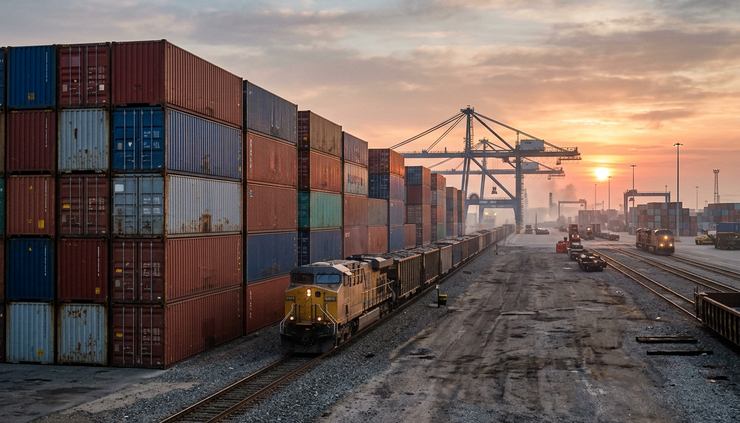
The flow of money is moving through three channels
The first channel is defense and maritime security. Shipping disruptions raise demand for escorts, radar, drones, interceptors, patrol vessels, surveillance aircraft, and port security. Public defense budgets move slowly, but markets often anticipate future spending.
The second channel is Wall Street and commodity finance. Higher volatility increases the need for hedges. Airlines, trucking fleets, refiners, food companies, and industrial firms may seek protection against fuel spikes. Traders may also profit from spreads between regions, grades, and delivery dates.
The third channel is Big Tech infrastructure. Modern logistics relies on satellite tracking, cloud systems, predictive routing, AI demand forecasting, and cybersecurity. If supply chains become more militarized and data-driven, the companies that control computing infrastructure can become strategic suppliers.
This is why the crisis cannot be viewed only as an oil story. It is also a financing story, a security story, and a technology story.
Portfolio scenarios are splitting into three broad paths
This article is informational only and is not financial advice. The scenarios below describe how investors and risk managers commonly frame a shock of this type.
A contained shock would favor quality and cash flow
In a contained scenario, maritime disruptions remain serious but limited. Diesel prices stay high for a period, then ease as inventories rebuild, refineries adjust, and rerouting becomes routine.
In this case, markets may favor:
Companies with pricing power
Energy firms with low production costs
Defense names with confirmed order books
Short-duration bonds and cash-like instruments
Logistics firms that can pass through fuel surcharges
The risk is that markets may price relief too early. Diesel can fall quickly, but supply-chain costs often reset slowly.
A prolonged squeeze would reward scarcity assets
In a prolonged squeeze, shipping delays persist and diesel remains expensive. Treasury yields stay high because inflation does not fall fast enough for central banks to cut rates with confidence.
This path could support:
Oil and gas producers
Refiners and midstream operators
Commodity-linked assets
Defense and maritime security suppliers
Inflation-protected securities, depending on entry price
The danger is demand destruction. If fuel costs stay too high, freight volumes can fall, consumers can pull back, and industrial activity can slow.
A financial break would shift attention to liquidity
The most severe scenario is not just higher oil. It is a credit event.
If yields keep rising while energy costs squeeze margins, weaker borrowers can face refinancing stress. Banks may tighten lending. Companies with heavy debt loads may cut spending. Governments may face rising interest costs just as voters demand relief from inflation.
In that case, investors typically focus on liquidity, balance-sheet strength, and counterparty risk. Cash, short-term government bills, and high-quality assets may become more important than chasing crisis winners.
The warning sign would be a shift from price volatility to funding stress. Energy markets can absorb high prices for a time. Credit markets are less forgiving when confidence breaks.

What officials and markets will watch next
The next phase depends on a few measurable signals.
Energy analysts will track distillate inventories, refinery utilization, crack spreads, tanker rates, and shipping insurance costs. A rise in inventories would ease pressure. A further jump in war-risk premiums would point the other way.
Bond traders will watch Treasury auctions, foreign demand, inflation expectations, and real yields. A weak auction at high yields would raise concern that the market needs even more compensation to absorb U.S. debt.
Central banks will watch whether diesel and freight costs feed into core inflation. If the shock stays mostly in energy, policymakers may look through part of it. If it spreads into wages, services, and long-term expectations, rate cuts become harder to justify.
Security officials will focus on whether maritime disruption remains episodic or becomes systematic. Sporadic attacks are costly. A sustained campaign against chokepoints would be a different order of risk.
The evidence points to a fragile system, not one clean answer
The available facts support a clear conclusion: diesel, shipping chokepoints, and Treasury yields are now linked in a way that raises systemic risk.
The evidence does not prove one master plan behind the crisis. It does show that adversaries, traders, governments, and investors all understand the same pressure points. Diesel moves the physical economy. Chokepoints move global trade. Treasuries move the financial system.
If all three remain under pressure at once, the result is more than an energy story. It becomes a test of whether the U.S. and its allies can defend supply routes, control inflation, finance debt, and keep markets liquid at the same time.
For now, the most reliable signal is not rhetoric. It is the price of diesel, the cost of shipping insurance, and the yield demanded by Treasury buyers. Those numbers will show whether the current shock is easing, spreading, or turning into the next major financial stress event.