


The Feds Secret Inflation Trap Why Prices Could Keep Rising

Start here if you want the full video breakdown with the timeline and examples: watch “The Fed’s Secret Inflation Trap” on YouTube.

Prices can feel permanently high even when official inflation is “coming down.” That is the disconnect most households are living through.
If inflation falls from a hot pace to a slower pace, prices are usually still rising. They are just rising more slowly. A grocery bill that jumped from $120 to $150 does not go back to $120 because inflation cools. It may go from $150 to $154 instead of $165. That looks better in a chart, but it still feels worse at the checkout line.
That is where the Federal Reserve’s inflation trap begins. The Fed wants inflation low enough to protect purchasing power, but not so tight that it breaks employment, credit, housing, banks, or the federal budget. At the same time, the data the Fed watches can lag, get revised, or smooth over the exact price spikes people notice most.
The result is a system where inflation may not need to explode to hurt. It only needs to stay sticky.

Why prices still feel high when inflation is lower
The first trap is language.
When officials say inflation has cooled, many people hear “prices went down.” That is usually not what happened. Inflation measures the rate of price increases. Deflation means the overall price level falls, and that is rare across the whole economy.
The Consumer Price Index, published by the Bureau of Labor Statistics, tracks a basket of goods and services. The Federal Reserve tends to focus more on Personal Consumption Expenditures inflation, or PCE, which comes from the Bureau of Economic Analysis and covers a broader range of spending. Both can show improvement while households still feel squeezed.
A simple example:
Price story | What it means |
Inflation rises from 3% to 7% | Prices are rising much faster |
Inflation falls from 7% to 3% | Prices are still rising, just slower |
Prices fall outright | That is deflation, not just lower inflation |
This matters because wages, rents, insurance, car payments, and grocery prices do not all adjust at the same speed. Some incomes catch up. Some do not. Some costs reset higher and stay there.
That is why the public can feel like the official story is disconnected from daily life. The chart improved, but the receipt did not.
The Federal Reserve faces a real dilemma
The Federal Reserve has a dual mandate from Congress: maximum employment and stable prices. Those goals can clash.
If the Fed keeps interest rates high for too long, borrowing gets harder. Mortgages stay expensive. Credit card interest hurts more. Businesses may slow hiring. Banks may tighten lending. The economy can weaken.
If the Fed cuts rates too soon, demand can heat back up. Asset prices can rise. Credit can expand. Inflation can regain momentum.
That is the dilemma.
The Fed also operates in a political environment, even though it is designed to be independent. Presidents, lawmakers, markets, homeowners, banks, and investors all care deeply about interest rates. Rate cuts can make borrowing easier and lift markets. Rate hikes can cool inflation but create financial pain.
There is another pressure point: government debt. Higher rates make newly issued Treasury debt more expensive to service. That does not mean the Fed takes orders from the Treasury. It does mean the economy is more sensitive to high rates than it was when debt and asset prices were lower.
This is the core of the trap. The Fed may need tight policy to control inflation, but the financial system keeps asking for relief.
The 2 percent inflation target is not magic
The Fed’s 2% inflation target is often treated like a law of nature. It is not.
The Federal Open Market Committee formally adopted a 2% longer-run inflation goal in 2012. The idea was that low, stable inflation helps households and businesses plan. It also gives the central bank room to cut real interest rates during downturns.
In 2020, the Fed updated its framework to seek inflation that averages 2% over time. That means periods below 2% could be balanced by periods above 2%. In practice, this framework became controversial once inflation surged after the pandemic. Critics argue that waiting too long for “average” inflation gave price pressure more time to spread.
The key point is simple: 2% is a policy choice, not a physical law.
If inflation sits above 2% for years, prices compound. A few percentage points may sound small, but compounding is powerful. At 3% inflation, the price level roughly doubles in about 24 years. At 4%, it doubles in about 18 years. That is not a forecast, but it shows why “just a little higher” inflation can quietly shrink purchasing power.
The public does not live inside annualized charts. People live inside monthly bills.

The data problem makes the trap worse
The Fed says it is data-dependent. That sounds responsible. The problem is that economic data can be late, noisy, incomplete, and revised.
Inflation data does not arrive in perfect real time. Jobs numbers can be revised. GDP is revised. Seasonal adjustments can change the picture. Surveys can miss changes in behavior. Some expectations measures rely on phone or online surveys, which can be affected by who responds and how questions are framed.
This does not mean the data is fake. It means the economy is too large and fast-moving to measure perfectly.
The inflation picture is also complicated by the difference between headline and core inflation.
Headline inflation includes food and energy. Core inflation usually excludes them because they can swing sharply from month to month. Policymakers often watch core measures because they can reveal the underlying trend.
That makes sense for modeling. It can still feel absurd to households.
Food and energy are not optional. Gasoline, electricity, heating fuel, groceries, and insurance touch daily life. If energy spikes because of an oil shock, the Fed may call it volatile. A family filling the tank sees cash leaving the account.
This gap between measured inflation and lived inflation is one reason trust breaks down.
Step 1 is dropping forward guidance
For years, central banks used forward guidance to shape expectations. They told markets how policy might evolve if the economy followed a certain path. That helped investors, banks, and businesses plan.
More recently, the Fed has leaned harder on “meeting by meeting” decisions and data dependence. That gives policymakers flexibility. It also reduces clarity.
Less forward guidance can create a hidden inflation problem. If markets believe the Fed will cut quickly at the first sign of weakness, financial conditions can loosen before inflation is fully beaten. Stocks may rise. Credit spreads may tighten. Mortgage rates may fall. Households and businesses may feel richer or more willing to borrow.
That can stimulate demand without the Fed officially cutting much at all.
This is where Inflation, FederalReserve, Economy, InterestRates, PersonalFinance, StockMarket concerns all meet. Expectations move money before policy does.
When the Fed becomes less predictable, markets try to guess the pivot. Those guesses can ease conditions and make the inflation fight harder.
Step 2 is relying on trimmed inflation measures
Trimmed mean inflation measures can be useful. The Dallas Fed, for example, publishes a trimmed mean PCE inflation measure that removes the most extreme price changes from both ends of the distribution. The goal is to find the central trend without being distracted by outliers.
That makes sense when a single category swings wildly.
The risk is that “outliers” can become the story.
Energy is the clearest example. A short oil spike may fade. A lasting oil shock can spread through transportation, food production, shipping, plastics, airlines, utilities, and consumer expectations. Insurance is another example of a category that may not reverse quickly once it resets higher. Housing costs can also move with long lags.
If policymakers focus too much on smoothed data, they may underreact to pressure building in the real economy.
The danger is not that trimmed data exists. The danger is treating it like the only truth.
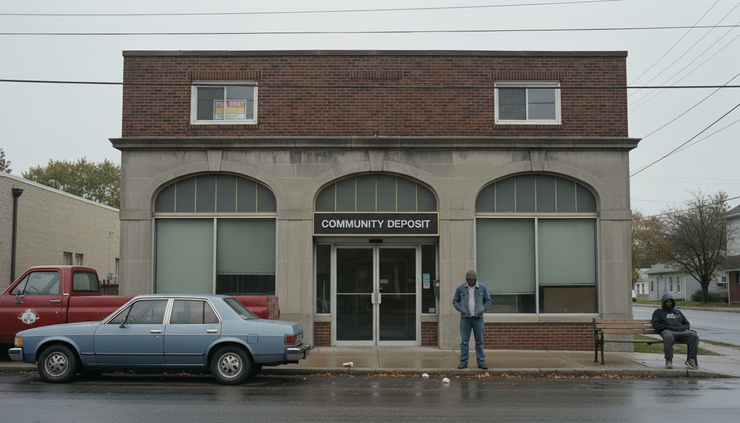
Step 3 is money creation through commercial banks
People often picture money printing as a central bank creating cash out of thin air. That happens in a broad sense when central banks expand reserves through asset purchases. But a major part of money creation happens through the commercial banking system.
When a bank makes a loan, it creates a deposit. That deposit becomes spendable money in the economy. The process is constrained by capital rules, credit demand, risk management, regulation, and the bank’s balance sheet. Still, credit creation is a real monetary force.
This matters because inflation can return even if the Fed is not running a pandemic-style stimulus program. If banks expand lending, asset values rise, and consumers borrow more, money and demand can grow.
There is a second layer. When the financial system gets stressed, authorities often create liquidity facilities to prevent panic. These may be justified to stop bank runs or market breakdowns. But liquidity support can also soften the impact of tight monetary policy.
That is the trap again: the Fed tightens to fight inflation, then the system needs liquidity to avoid breaking.
Step 4 is the geopolitical wild card
Oil is the wild card that can wreck clean inflation forecasts.
The United States is a major energy producer, but oil is priced in a global market. Conflict in the Middle East, sanctions, shipping disruptions, attacks near key trade routes, or production cuts by major exporters can push energy prices higher. Even the fear of disruption can move prices.
Oil feeds into inflation through more than gasoline. It affects diesel, trucking, shipping, farming, petrochemicals, airline fuel, and heating costs. If businesses expect energy costs to stay high, they may raise prices preemptively. If workers expect living costs to rise, they may push for higher wages. That is how a supply shock can bleed into broader inflation.
War and geopolitics also affect defense spending, supply chains, metals, grains, and shipping insurance. These are not fringe risks. Recent years have shown that supply chains can break, reroute, and reprice faster than many models assume.
The Fed cannot pump more oil. It cannot reopen a shipping lane. It cannot end a war. It can only influence demand through financial conditions.
That is why energy shocks are so dangerous for central banks. They raise prices while also threatening growth. Tightening into that kind of shock can hurt. Ignoring it can let inflation expectations drift higher.
What this means for your wallet
The practical takeaway is not panic. It is preparation.
If inflation stays sticky or worsens, cash loses purchasing power faster. Debt with variable rates becomes more expensive. Big purchases become harder to time. Investments can swing as markets reprice rate expectations.
A sensible response starts with the basics:
Build a cash buffer for emergencies, but do not hold more idle cash than needed for long-term goals.
Pay close attention to variable-rate debt, especially credit cards.
Compare yields on savings accounts, Treasury bills, money market funds, and certificates of deposit before leaving cash in a low-yield account.
Keep essential expenses visible, especially food, insurance, utilities, and transportation.
Avoid assuming rate cuts will quickly make housing or borrowing cheap again.
Diversify investments instead of betting everything on one inflation outcome.
This is informational only and not personal financial advice. Financial decisions depend on income, debt, risk tolerance, time horizon, and tax situation.
The bigger point is that inflation protection is not only about buying one asset. It is about reducing fragility. A household with too much variable debt and no savings is fragile. A household with fixed costs, emergency cash, and a plan has more room to absorb shocks.

The inflation trap is about incentives
The Fed’s secret inflation trap is not that one person flips a hidden switch. It is that the system has built-in incentives that make inflation hard to kill.
Markets want easier money. Politicians prefer growth. Borrowers want lower rates. Banks need liquidity when stress rises. Consumers want relief. The Fed wants credibility, but it also wants to avoid causing a deep downturn.
At the same time, the data can lag. Energy can spike. Credit can expand. Inflation measures can smooth over pain that households feel immediately.
That mix can keep prices rising longer than official optimism suggests.
The mistake is assuming inflation only comes from one source. It can come from supply shocks, fiscal deficits, credit growth, energy prices, wages, rents, expectations, and central bank policy. When several of those forces line up, inflation can get worse even after everyone says the worst is over.
The chart may cool before life gets cheaper. That is the part most people miss.


